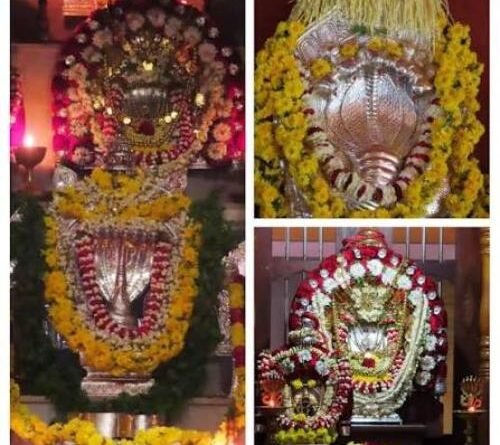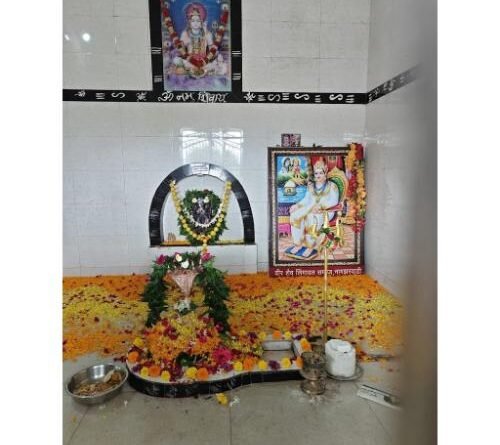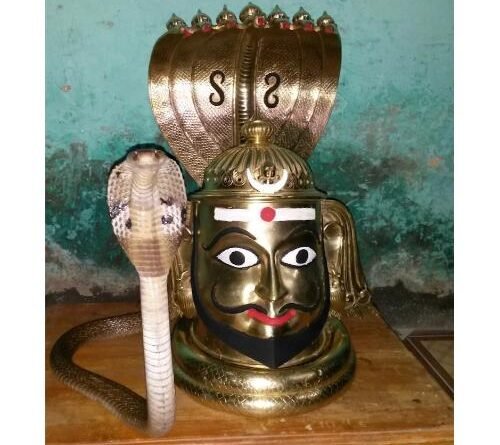



Battis Shirala Naga Temple Maharashtra
Battis Shirala Nagaraja Temple is a spiritually important and ancient temple located in Battis Shirala town of Sangli district, Maharashtra. The temple is world-famous for its unique and centuries-old Nagaraja (Snake God) worship tradition, which reaches its peak during the sacred festival of Nag Panchami.
Temple Age & Antiquity
The Naga worship tradition at Battis Shirala is believed to be more than 300–400 years old, though local oral traditions suggest it is much more ancient. This sacred practice belongs to ancient folk-Shaiva and tribal Naga worship systems, which existed long before structured stone temples. The sanctity of Battis Shirala comes from its living tradition, not from architectural age.
Deity Details
The presiding deity of Battis Shirala is Nagaraja (Naga Devta). Here, Nagaraja is worshipped not as a stone or metal idol, but in the living form of snakes, especially cobras. Nagaraja is closely associated with Lord Shiva, who is known as Nagabhushana—the one adorned with serpents. The snakes are treated as divine manifestations and are worshipped with great devotion, respect, and fearlessness.
Temple Architecture
Battis Shirala does not have a grand or traditional stone temple. Instead, it is a living spiritual center. Small shrines, sacred spots, and village temples serve as worship points. The true spiritual power of this kshetra lies in its ancient rituals, faith of the people, and continuous Naga worship tradition, rather than architectural grandeur.
History
In ancient times, Battis Shirala was surrounded by dense forests, fertile agricultural land, and underground water sources, making it a natural habitat for serpents. The villagers believed that snakes were guardians of the land, crops, cattle, and family lineage. Instead of killing or fearing them, the community chose to respect and worship Nagaraja. Over generations, this belief became deeply rooted, transforming Battis Shirala into the most prominent Nagaraja worship center in India.
Sthalapurana
According to the ancient Sthalapurana, Battis Shirala has been a sacred land of serpent worship since very early times. In those days, Nagas were believed to be divine guardians of the earth, water sources, fertility, and hidden natural energies. This region was once filled with dense forests, fertile soil, and underground water channels, making it a natural dwelling place for snakes. The local people believed that these serpents were not ordinary creatures, but divine beings connected to Lord Shiva, who is known as Nagabhushana, the one adorned with serpents.
In the distant past, frequent snake sightings created fear among the villagers. Some people, out of ignorance, tried to harm the snakes, which disturbed the natural balance of the land. As a result, the village faced insecurity, crop-related problems, and constant fear. Seeing this, a wise elder advised the villagers to stop harming the serpents and instead worship Nagaraja with devotion, as snakes were protectors and not enemies.
Following this advice, the villagers performed sincere Naga Puja, offering milk, turmeric, flowers, and prayers, and sought forgiveness for their past actions. They prayed to Nagaraja to protect their land, families, and cattle. That very night, Nagaraja appeared in the dream of the village head and assured him that if snakes were respected as living forms of divinity, the village would be protected and blessed.
From that day onwards, a remarkable change was noticed in Battis Shirala. Snakebite incidents reduced drastically, crops flourished, rainfall became regular, and peace returned to the village. The fear that once existed was replaced by devotion and respect, and Nagaraja was accepted as the guardian deity of the land.
The Sthalapurana further states that Lord Shiva blessed Battis Shirala as a sacred Naga Kshetra and granted Nagaraja permission to accept worship here in living form. It is believed that especially on Nag Panchami, serpents appear calmly to receive prayers, showing the divine presence of Nagaraja.
Even today, devotees believe that Nagaraja resides invisibly in Battis Shirala, protecting the village and those who worship with faith. Worship here is believed to remove Sarpa Dosha, bless childless couples, bring ancestral peace, and maintain harmony between humans and nature. The Sthalapurana finally teaches that compassion, respect for life, and devotion are the true paths to Nagaraja’s blessings.
Festivals
The most important festival at Battis Shirala is Nag Panchami, which is celebrated on a grand scale and is the main reason for the temple’s fame. On this sacred day, live cobras are worshipped as Nagaraja, and devotees offer prayers seeking protection, relief from Sarpa Dosha, fertility, and family well-being. Special worship is also performed during the Shravan month, as Nagaraja is closely associated with Lord Shiva, and on Amavasya days, which are considered auspicious for Naga and ancestral prayers.