

Palakkad Fort Sri Hanuman Temple (Kote Anjaneya Temple) Kerala
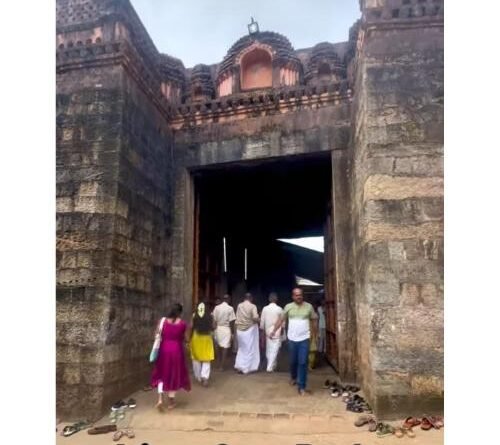
Palakkad Fort Sri Hanuman Temple is located inside the historic Palakkad Fort on South Fort Road in Kunathurmedu, Palakkad city, Kerala. The shrine lies on the inner eastern gateway of the fort, making it easily accessible to devotees and visitors exploring the fort.
Temple Age
The temple is considered one of the oldest Hanuman shrines in the region. The carved figure of Hanuman on the fort wall is believed to be centuries old. Although Hyder Ali rebuilt the fort in 1766, the Hanuman carving existed even earlier and has been worshipped continuously over generations.
Deity Details
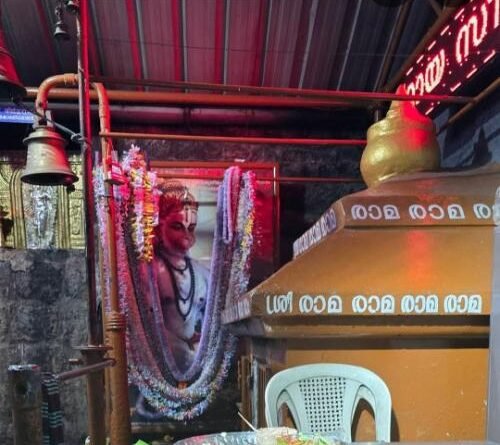
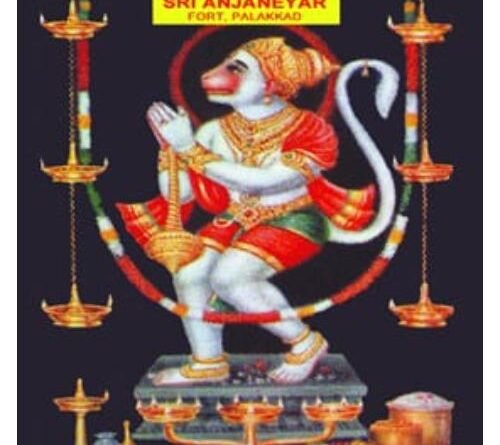
The main deity is Lord Hanuman, also known as Anjaneya. The idol is sculpted directly on the granite wall of the fort in a standing posture. Hanuman holds His mace in a folded-hands style, symbolising devotion and humility, while his raised tail ending with a small bell signifies alertness, power, and protection. Devotees pray here for courage, strength, success, and relief from obstacles.
Architecture
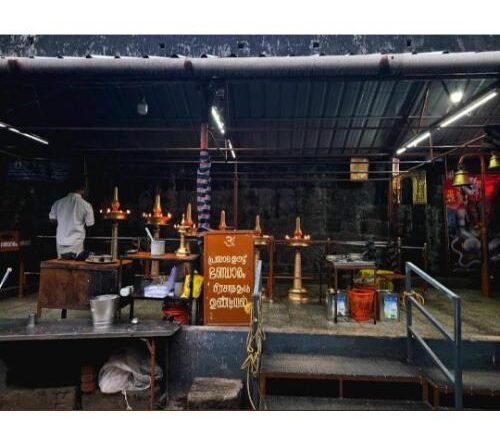
The temple is unique because it is not a separate structure but part of the fort’s inner wall. The carving follows the ardha-shilpa style, where the idol is embedded within the stone. A simple platform for lamps and offerings is present, surrounded by the fort’s vast stone walls, moat, and open grounds, giving the temple a historic and powerful ambience.
History
The history of the temple is woven into the history of Palakkad Fort. The fort has seen the rule of Hyder Ali, Tipu Sultan, the Zamorin, and the British. Through every change of power, Hanuman remained the fort’s divine protector. Soldiers considered Him their guardian and prayed before entering battle. Over time, the carving evolved into a full temple, maintained by local devotees and later supported by the Sri Anjaneya Seva Samithi.
Sthalapurana
The Sthalapurana of the Palakkad Fort Hanuman Temple speaks of Lord Hanuman as the eternal guardian of the Palakkad Gap. Long before Hyder Ali rebuilt the fort, a simple Hanuman carving existed near the old structure, placed there to protect the gateway that connected Kerala and Tamil Nadu. When the fort was strengthened, this divine image was carved into the granite wall, and soldiers began worshipping him as Kote Rakshaka, the Protector of the Fort. They believed Hanuman stood guard over the region and that no enemy could cross his gaze. His raised tail with a bell symbolised his constant alertness. Local legends say that during times of danger, a divine glow appeared around the carving, assuring the soldiers of his protection.
Before marching to battle, warriors would bow to him seeking courage, victory, and a safe return. Even during later periods of Tipu Sultan and British rule, the idol remained untouched and continued to be revered. Devotees today believe that Hanuman here removes fear, protects families, grants mental strength, and blesses anyone who prays with devotion. This living tradition forms the heart of the temple’s Sthalapurana.
Festivals
The temple celebrates several important festivals. Rama Navami is the grand festival, observed for nine days with special pujas and bhajans inside the fort. During Ramayana Masam, Ramayana recitations and cultural programmes such as Tholpavakoothu and Ottamthullal are performed. Tuesdays and Saturdays are special days for Hanuman devotees. Common offerings include vada mala, betel-leaf garlands, and ghee lamps.