


Shivala Veer Bhan Temple Amritsar
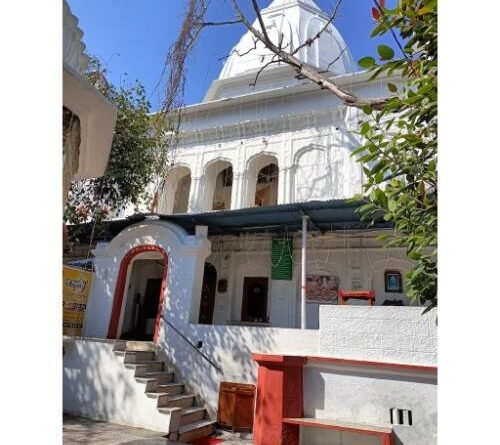
Shivala Veer Bhan Temple is located in Ramanand Bagh (Ghee Mandi), Amritsar, within the quiet heritage lanes of the old city.
Deity Details
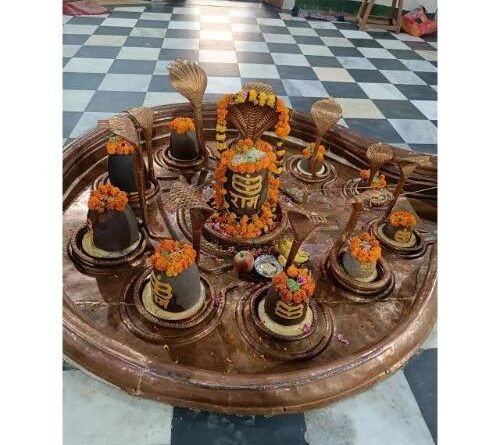
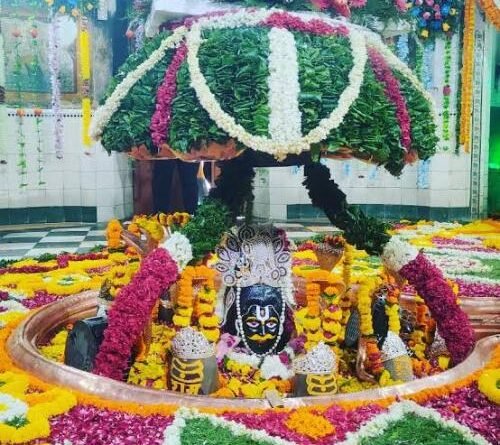
The temple is dedicated to Lord Shiva. Inside the sanctum, there are 11 Shiva Lingams, arranged in a sacred alignment. The main Shiva Lingam is positioned in such a way that the first rays of the rising sun fall directly on it, symbolizing divine brilliance and the presence of Lord Shiva as cosmic light.
Architecture
Built on a raised platform, the temple displays a blend of Sikh-era and traditional Hindu architectural styles. The walls contain rare 19th-century frescoes, depicting Puranic scenes, Shiva’s forms, and celestial beings. These frescoes are painted with natural colors and are one of the finest examples of Amritsar’s heritage art.
The mandapa features arched entrances, ornate pillars, and traditional motifs. The intelligent design allows sunlight to travel directly into the Garbhagriha at sunrise, illuminating the main Lingam naturally.
History
Shivala Veer Bhan was constructed in 1841 by Veer Bhan, a renowned vaidya and respected member of Maharaja Sher Singh’s court. He was honored with the title “Misr”, indicating his scholarly and noble status. The temple was envisioned as a sacred space where devotion, healing, and artistic expression could coexist. It soon became a spiritual landmark in old Amritsar, cherished for its calm energy and heritage richness.
Sthalapurana
The Divine Dream of Veer Bhan
According to local legend, Veer Bhan was a deeply spiritual man who practiced Ayurveda and meditation. One night, during intense spiritual practice, he saw Lord Shiva in a dream, radiating a glow brighter than sunrise. Shiva showed him a specific spot in Amritsar where divine light naturally descended upon a sacred Lingam. Veer Bhan awoke with the strong conviction that he had received a command to locate this place and establish a temple.
Discovery of the Sacred Spot
Days later, while walking through the old quarters of the city, Veer Bhan noticed a particular spot in Ghee Mandi where the early morning light fell in a straight, undisturbed line. He meditated there and felt an unusual spiritual vibration. Local elders told him that the spot had been considered auspicious for generations. Believing this to be the same place shown by Shiva, Veer Bhan decided to consecrate a temple exactly on that location.
The Installation of Eleven Shiva Lingams
It is said that Lord Shiva again appeared in Veer Bhan’s meditation and instructed him to install 11 Shiva Lingams, symbolizing the Ekadasha Rudras —the eleven cosmic forms of Shiva who govern creation, preservation, dissolution, time, and energy. Veer Bhan brought the Lingams from sacred places, performed elaborate rituals, and installed them in a cosmic alignment inside the temple. Devotees believe that each Lingam represents a specific blessing—removal of past sins, curing of ailments, protection from unseen dangers, and spiritual upliftment.
Sunlight as Shiva’s Blessing
The most unique part of the Sthalapurana speaks about the sunlight entering the sanctum at sunrise. Veer Bhan, guided by the divine vision, designed the structure with specific measurements so that the first rays of the sun directly touch the main Lingam every morning. Local tradition considers this the physical manifestation of “Suryabhisheka,” meaning Shiva being worshipped by the Sun itself. Even today, devotees see this daily sunbeam as a living testimony of Veer Bhan’s divine guidance.
Festivals
Shivala Veer Bhan Temple celebrates Maha Shivaratri with great devotion, including night-long abhisheka and special rituals. Shravan Maas sees daily chanting of Shiva mantras and simple community worship. Mondays are considered highly auspicious, with devotees offering milk, water, and bilva leaves. The festivals are modest but spiritually intense, attracting people from the old neighborhoods of Amritsar.