






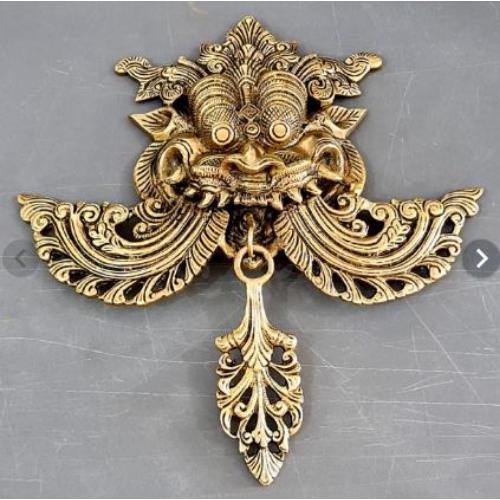
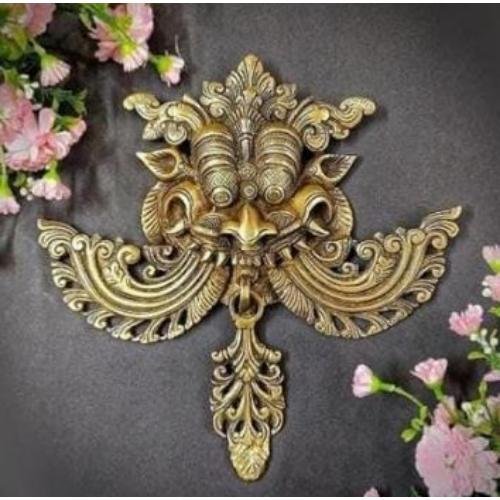
Description
1. Protection and warding off negativity:
Kirtimukha is primarily known for its protective qualities.
It is believed to ward off evil spirits, negative energies, and harmful influences, making it a popular symbol for placement at the entrance of homes, temples, and other sacred spaces.
Its fierce appearance is thought to deter malevolent forces and create a positive and safe environment.
2. Promotion of peace and harmony:
Kirtimukha is also associated with promoting peace, happiness, and overall well-being within a home or community.
It is believed to foster harmony among family members, reduce conflicts, and create a sense of prosperity.
The positive energy associated with Kirtimukha is thought to contribute to a more balanced and harmonious living space.
3. Reminder of the cyclical nature of life:
Kirtimukha’s fierce appearance, particularly its open mouth, symbolizes the cyclical nature of creation and destruction in the universe.
It serves as a reminder of the impermanence of life and the importance of detachment from worldly possessions and ego.
4. Spiritual growth and self-realization:
In some tantric traditions, Kirtimukha is worshipped for spiritual growth, self-realization, and enlightenment.
It is believed to purify the mind, body, and soul, freeing individuals from negative patterns and karmic debts.
5. Artistic and symbolic value:
Kirtimukha’s unique and powerful imagery adds a striking visual element to Hindu art and architecture.
It is frequently incorporated into the design of temples, sculptures, and other sacred spaces, enhancing their spiritual and aesthetic appeal.
Its placement on deity sculptures, particularly those of Lord Shiva, serves as a reminder of the deity’s role in maintaining cosmic balance and protection.
In essence, Kirtimukha is a multifaceted symbol that embodies protection, auspiciousness, and the cyclical nature of existence, reminding individuals to cultivate humility, devotion, and a positive outlook on life.





Reviews
There are no reviews yet.