


Narasimha Temple Susunia Hill,West Bengal
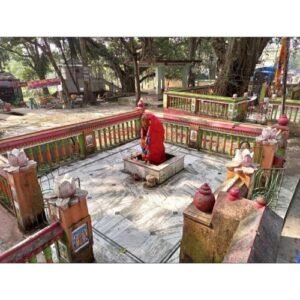
The Narasimha Temple is located at the foothills of Susunia Hill in Bankura district of West Bengal, surrounded by rocky terrain, forests, and a peaceful natural environment, around 20–25 km from Bankura town. This is an open-air shrine rather than a structured temple, giving it a very raw and ancient spiritual feel.
Temple Age
The exact age of the temple is not recorded, but it is believed to be very ancient, and the style of worship suggests that it may have originally been a tribal sacred site long before it became associated with Hindu traditions, with the worship itself being older than the present simple structure.
Deity Details
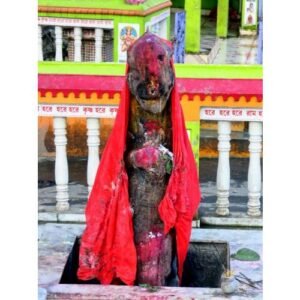
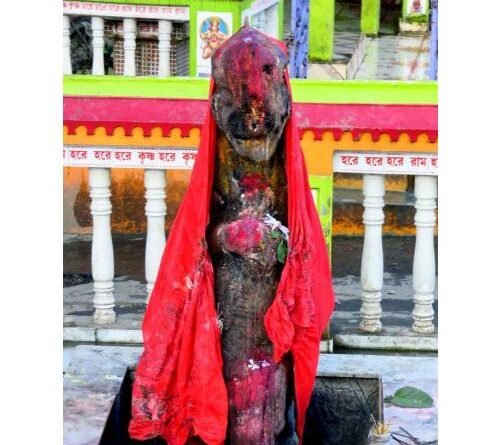
The deity worshipped here is Lord Narasimha, the fierce incarnation of Vishnu, but the idol is very different from typical Narasimha forms seen in temples, as it is a rough stone monolith placed in the open with a powerful and somewhat demonic appearance, unlike refined Puranic descriptions, and because of this unique form it is believed that the idol was originally worshipped by local tribal communities such as Santhals, Kols, Mundas and others as a protective deity before being identified with Narasimha.
Architecture
Architecturally, the temple is extremely simple, with no gopuram, carvings, or mandapam, and consists of an open shrine made with natural stone, where the surrounding hills, rocks, and greenery themselves form the sacred space, reflecting an ancient nature-based style of worship.
History
Historically, Susunia Hill is known for ancient inscriptions and early human settlements, indicating that the region has been culturally important for thousands of years, and the Narasimha shrine likely evolved from a local tribal worship site into a recognized Hindu temple over time, preserving a blend of indigenous and Vaishnavite traditions.
Sthalapurana
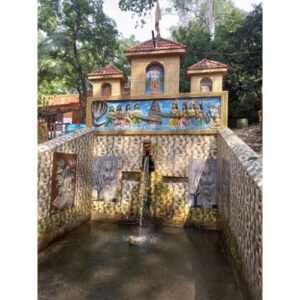
According to local tradition, after the slaying of the demon king Hiranyakashipu, Lord Narasimha remained in his intense and fierce form, with uncontrollable anger and heat radiating from him. Even after protecting Prahlada, his fury did not immediately subside, and the gods were unable to calm him. It is believed that during this phase, he moved across different regions seeking a calm place to regain balance, and eventually arrived at the quiet and forest-covered hills of Susunia. The natural isolation and cooling environment of the hill helped reduce his anger. The sacred spring near the temple, known as Dhara, is believed to have played an important role, where the Lord is said to have washed his claws and cooled his body, symbolically releasing the remaining heat of his wrath. Over time, this place became associated with his calm state after destruction. At the same time, the unusual and non-classical form of the idol suggests that this site may have already been a sacred spot for tribal communities who worshipped a fierce protective stone deity. Later, with the spread of Vaishnavite traditions, this powerful local deity was identified with Narasimha, and the Puranic story became connected to the place. Because of this, the Sthalapurana here is unique, combining both the classical Narasimha legend and older indigenous beliefs.
Devotees believe that just as the Lord calmed his anger here, praying at this temple helps overcome fear, anger, inner disturbance, and negative energy.
Dhara (Sacred Spring)
Near the temple is the sacred spring known as Dhara, where water continuously flows from a stone spout, the source of which is still unknown, and this water is believed to have medicinal and purifying properties and is often considered cleaner and better than packaged drinking water, making it spiritually and physically important for visitors.
Festivals
The main festival celebrated here is Narasimha Jayanti, during which special pujas and rituals are performed and devotees gather in good numbers, along with other Vaishnava festivals and local tribal fairs that bring cultural vibrancy to this otherwise peaceful and natural hill shrine.